Skin Peels
A professional skin peel uses a carefully chosen solution to remove the outer layer of dull, older skin and encourage renewal, helping to improve fine lines, sun damage, uneven tone and a sallow complexion.
Book an appointment →Understanding Skin Peels
- 01
Background
How Did Skin Peels Develop?
People have used natural acids to improve the skin for thousands of years, from sour milk (which contains lactic acid) to fruit and wine. Modern chemical peeling was developed by dermatologists during the twentieth century, using agents such as glycolic acid, salicylic acid and trichloroacetic acid (TCA) at controlled strengths and depths[1][2].
Today, peels are grouped by how deeply they act: superficial, medium or deep. Superficial and light-medium peels are among the most commonly performed non-invasive cosmetic procedures, because they can refresh the skin with relatively little downtime[1].
Ancientuse of natural acids such as sour milk20th centurycontrolled dermatological peeling agentsDepthsuperficial, medium or deep peelsTailoredthe peel is chosen to suit your skinFigure 1. How chemical peels developed into a modern skin treatment.
- 02
Modern Scientific Perspective
How Do Skin Peels Work?
A peel applies an acid solution that loosens and removes the outer layers of skin to a controlled depth. As the skin repairs itself, it is replaced with fresher-looking skin[1].
Peel solution
controlled exfoliationExfoliationOld, dull surface cells are removed, which can brighten the complexion.Cell renewalThe skin responds by producing new cells more quickly.CollagenDeeper-acting peels are associated with collagen remodelling, which may soften fine lines.Figure 2. How chemical peels are thought to renew the skin[1][2].
Reviews describe chemical peels as an effective option for photodamage, pigmentation and acne-related concerns when the right agent and technique are used for the right skin[1][2]. A 2026 systematic review comparing lasers and chemical peels found both improved skin rejuvenation outcomes, with similar overall effectiveness for photoageing; peels may suit people who want minimal downtime[3]. Results vary, and more than one treatment is often needed. Common side effects include redness, stinging, dryness and flaking; less commonly, pigment changes (especially in darker skin), cold-sore flare-ups or, rarely, scarring can occur.
References
- Soleymani T, Lanoue J, Rahman Z. A practical approach to chemical peels: a review of fundamentals and step-by-step algorithmic protocol for treatment. Journal of Clinical and Aesthetic Dermatology. 2018;11(8):21–28. pubmed.ncbi.nlm.nih.gov/30214663/
- Rendon MI, Berson DS, Cohen JL, Roberts WE, Starker I, Wang B. Evidence and considerations in the application of chemical peels in skin disorders and aesthetic resurfacing. Journal of Clinical and Aesthetic Dermatology. 2010;3(7):32–43. pubmed.ncbi.nlm.nih.gov/20725555/
- Karanasios G, Wong ZY, Limbu S, Faderani R, Kanapathy M, Mosahebi A. Comparative efficacy and safety of laser versus chemical skin peeling in skin rejuvenation: a systematic review and meta-analysis. Plastic and Reconstructive Surgery. 2026;158(2):263–272. doi.org/10.1097/PRS.0000000000012719
What you need to know
- 1Before your treatment
What to Prepare
14 days before:
- Avoid direct sun exposure without protection.
- No waxing or depilatory creams.
- Avoid other laser and skin treatments.
7 days before:
- Avoid exfoliators, acids and any retinol or vitamin A-based products.
24 hours before:
- Stay well hydrated by drinking plenty of water (at least 2 litres).
Please tell us if you are pregnant or breastfeeding, have a history of cold sores, have sensitive skin or eczema in the area, have used isotretinoin recently, or are allergic to aspirin (some peels contain salicylic acid). Your practitioner will choose a peel suitable for your skin.
- 2During your treatment
What to Expect
- Your skin is cleansed and prepared.
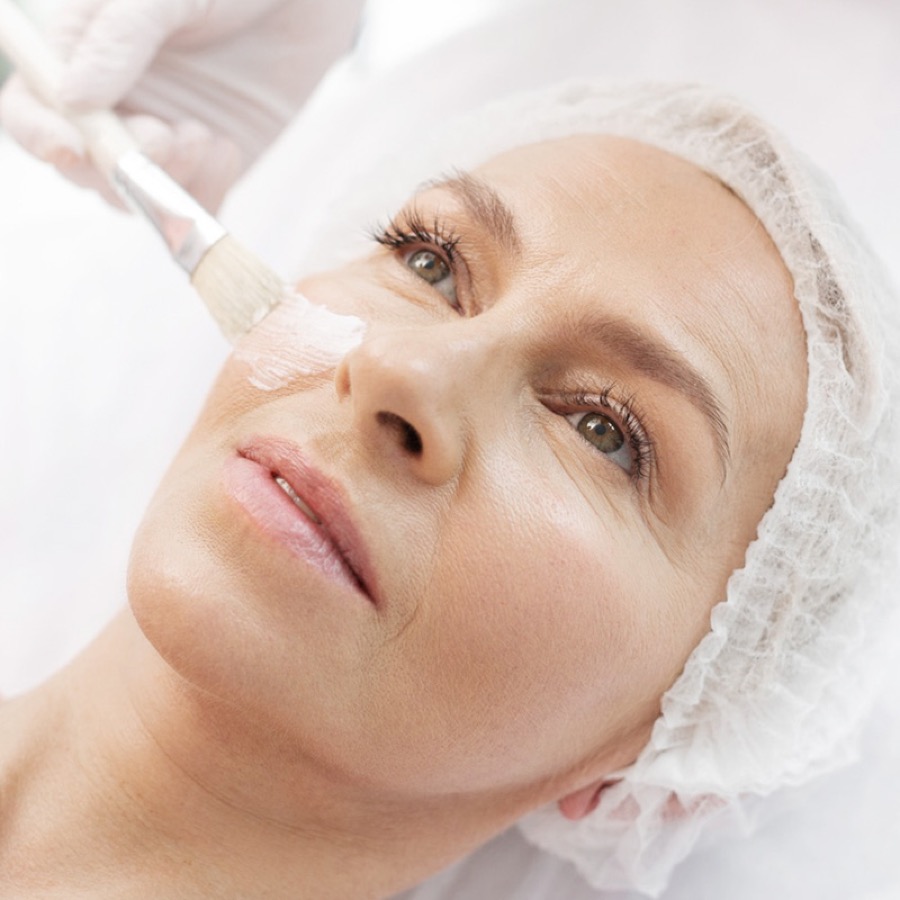
- The peel solution is applied evenly to the skin and left on for a set time.
- You may feel tingling, warmth or stinging, which usually eases quickly. Let your practitioner know how it feels.
- The peel is then neutralised or removed, and a soothing product and SPF are applied.
- 3After your treatment
Aftercare
- Avoid sun exposure for 2 weeks after your treatment.
- Avoid touching the skin.
- Avoid strong acidic products and exfoliators for at least 5 days.
- No facial hair removal for at least 14 days.
- Avoid heat, hot water and vigorous activity for 12 hours, as this may reactivate the treatment and cause a reaction.
- Use a gentle cleanser, serum, moisturiser and SPF 50 daily.
Redness, tightness and light flaking are common for several days. Do not pick or peel flaking skin. Contact us if you notice blistering, crusting or anything that concerns you.
Who skin peels are for
Skin peels are often chosen by people who want brighter, smoother-looking skin. These are some of the most common reasons our patients ask about them.
Fine lines
Early fine lines, which may look softer as the skin renews.
Learn more →Sun damage
Signs of photodamage such as roughness and uneven tone.
Sun spots and pigmentation
Sun spots and uneven pigmentation, which may fade gradually over a course of peels.
Dull, sallow complexion
Skin that looks tired or lacks radiance.
Uneven texture
Rough skin texture, which many patients choose a peel to smooth.
Blemish-prone skin
Congested skin and blemishes, where certain peels are often used.
Early signs of ageing
People who want to counter early signs of ageing as part of a regular skincare routine.
Your practitioner will assess whether a skin peel is right for you at your consultation. Results vary and are not guaranteed.
Frequently asked questions
Will my skin visibly peel?
Does a peel hurt?
How many peels will I need?
Are there any side effects?
Can I wear make-up afterwards?
Still have a question? Ask our practitioners.
What our patients say on Google
Conditions we often help with
More aesthetics treatments
Ready to try Skin Peels?
Our experienced TCM practitioners are here to help. Book online in under two minutes and choose the time that suits you.
- Fully licensed practitioners
- Covered by private health insurance